What is Reformer Pilates? The Ultimate Guide to History, Equipment, and Sourcing
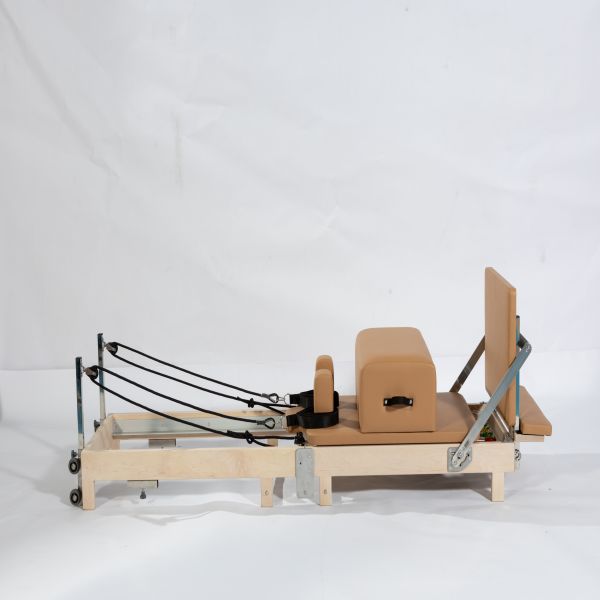
Reformer Pilates has evolved from a specialized rehabilitation method into the absolute standard of modern core training. Unlike traditional Mat Pilates, which relies solely on body weight, Reformer Pilates utilizes a precision-engineered machine to provide highly targeted resistance and full-body support.
Whether you are a fitness enthusiast looking to understand your studio’s equipment, or a business owner planning to invest in commercial apparatus, this comprehensive guide covers everything from historical origins to technical specifications and procurement ROI.
1. Definition and Origins: Who Invented the Pilates Reformer?
The Definition
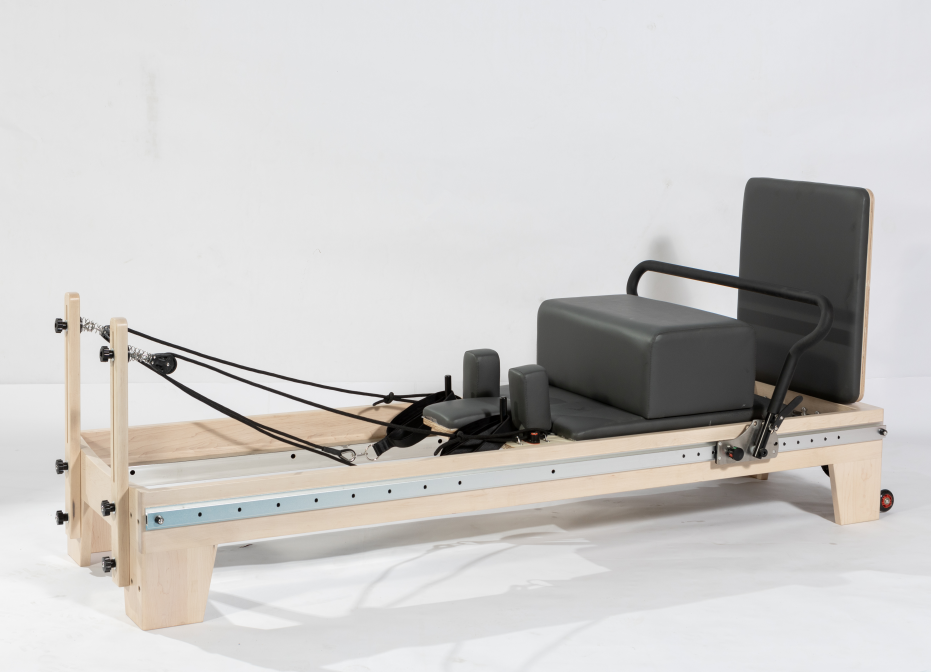
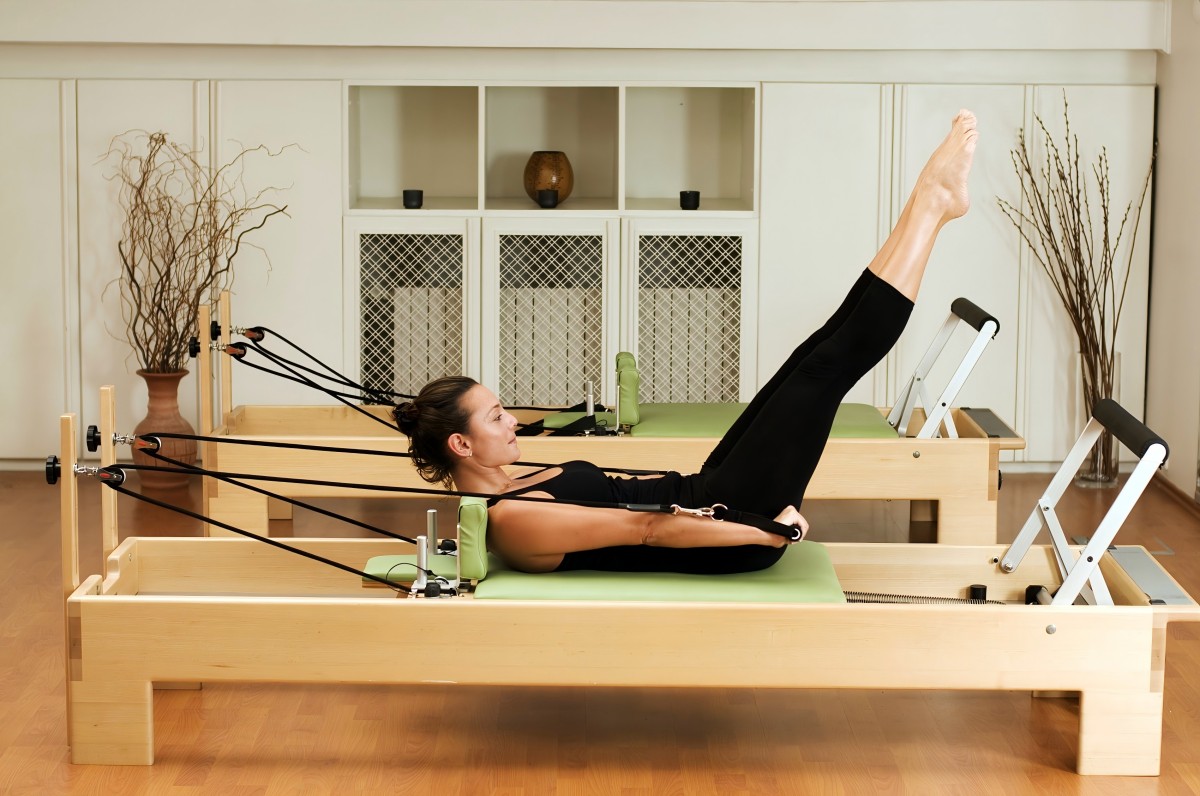
A Pilates Reformer is a bed-like apparatus consisting of a flat platform called a carriage, which slides back and forth on wheels within a structural frame. The carriage is connected to one end of the frame by a series of springs that offer varying levels of resistance. Exercises are performed by pushing against the footbar or pulling the nylon straps/loops attached to top pulleys, driving the carriage against the spring tension.
he Inventor & History
The apparatus was invented by Joseph Pilates in the early 20th century.
-
The Inception: During World War I, Joseph was interned on the Isle of Man. To help injured, bedridden soldiers maintain their physical conditioning, he rigged springs directly onto hospital beds, allowing patients to exercise against resistance while lying down.
-
The Evolution: This improvised "spring-bed" became the prototype for the modern Reformer. Joseph named it the "Reformer" because his goal was to "completely reform the entire body" through controlled, integrated mechanics.
2. Key Styles of Pilates Reformers & Their Differences
As the global fitness industry has modernized, Reformer designs have branched into three distinct commercial categories:
Classical / Legacy Reformer
-
Design & Mechanics: Strictly follows Joseph Pilates' original dimensions and blueprints. They typically feature a lower ground clearance, leather straps (instead of modern ropes), and uniform metal springs.
-
Spring System: The resistance across all springs is completely identical (no color coding). Adjusting intensity requires manually shifting the spring hooks across a mechanical gear system.
-
Target Audience: Purist studios, classical training academies (e.g., Romana’s Pilates certification programs).
Contemporary / Clinical Reformer
-
Design & Mechanics: The standard setup for modern commercial fitness. Engineered with advanced ergonomics, these machines feature a higher frame to allow physical therapists and instructors to correct form easily without constant bending.
-
Spring System: Utilizes a color-coded spring system (typically Red for heavy, Blue for medium, and Yellow for light resistance). The footbars, headrests, and shoulder blocks are multi-adjustable to accommodate diverse client heights.
-
Target Audience: Commercial boutique studios, premium gyms, physical therapy clinics.
Reformer with Tower (Combo / Half-Cadillac)
-
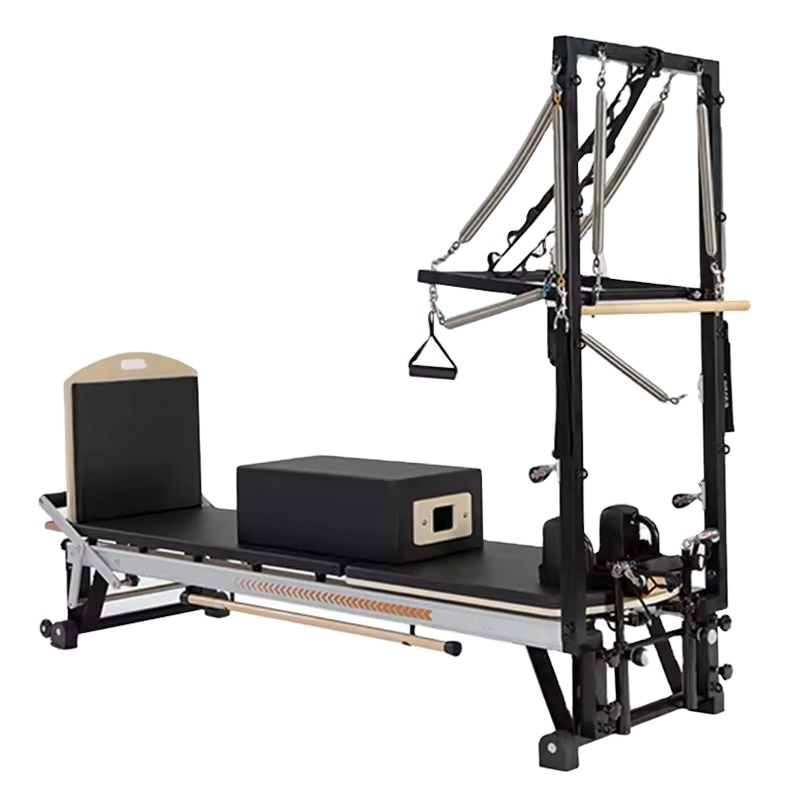
Design & Mechanics: A hybrid machine that mounts a vertical metal tower frame onto the head end of a Contemporary Reformer. It integrates the features of a Reformer with a Cadillac (trapeze table), adding push-through bars, roll-down bars, and overhead spring attachments.
-
Target Audience: Boutique studios looking to maximize training variety in small spaces.
3. Materials Matter: Wood vs. Aluminum vs. Composites
The frame material doesn't just dictate aesthetic style—it impacts structural stability, client experience, and long-term wear.
-
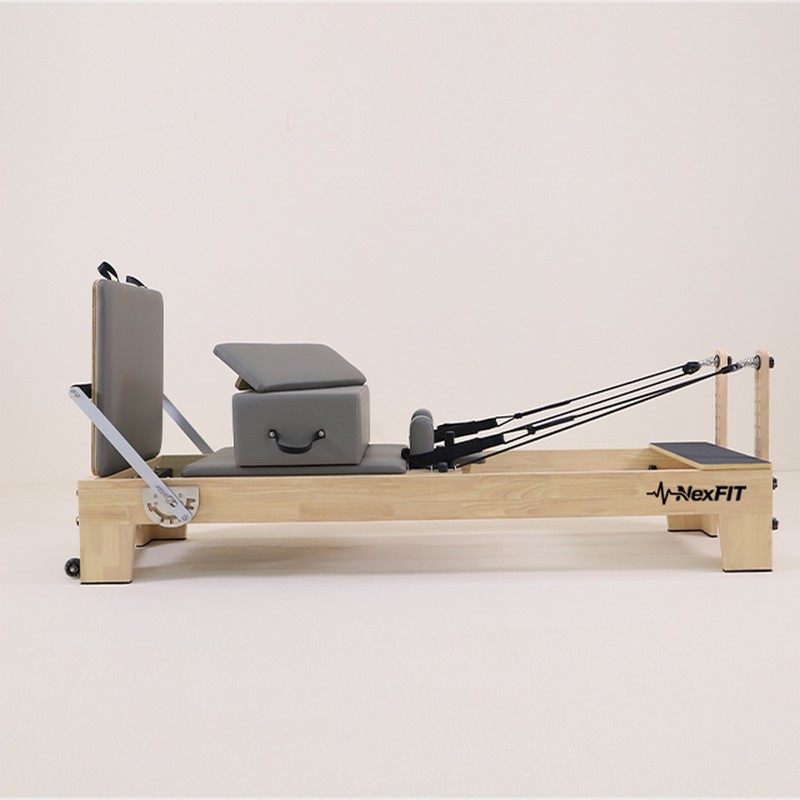
Solid Wood Frames (e.g., Maple, Oak, Beech):
-
Characteristics: Premium, warm, and high-end aesthetic.
-
The Advantage: Wood possesses superior shock absorption properties, virtually eliminating metal vibration noise. The heavy deadweight of solid wood provides rock-solid stability during high-intensity, explosive athletic movements.
-
-
-
Characteristics: Sleek, industrial, and hyper-modern.
-
The Advantage: Exceptionally durable, lightweight, and easy to sanitize between back-to-back group classes. The carriage glide feels incredibly crisp and industrial.
-
-
Composite & Foldable Materials (e.g., Carbon Fiber / Reinforced Plastics):
-
Characteristics: Ultra-light and mobile.
-
The Advantage: Specifically built for the home-gym market. They can be folded and rolled away into closets, though they sacrifice a degree of heavy-duty stability under high spring loads.
-
4. Biomechanics: How Exercises and Resistances Shift
A standard Reformer supports hundreds of exercises across multiple body orientations, including Supine (lying down for Footwork or Strap Work), Prone (lying face down on the box), Kneeling, and Standing (e.g., Side Splits targeting hip stabilizers).
The Counter-Intuitive Power of Spring Resistance
In weightlifting, more plates equal more difficulty. On a Reformer, lighter springs can actually make an exercise significantly harder, depending on whether the movement focuses on strength or core stabilization:
-
Heavy Spring Configuration (Multiple Red/Blue Springs):
-
The Effect: The carriage is anchored firmly. The challenge lies in the concentric and eccentric strength required by prime movers (e.g., glutes, hamstrings during footwork). It offers great stability, making it ideal for beginners.
-
-
Light Spring Configuration (Single Yellow/Light Spring):
-
The Effect: The carriage behaves like ice—the slightest micro-movement will cause it to fly open or crash closed.
-
The Challenge: Maximum Deep Core Recruitment. To execute a standing lunge or a plank on a single light spring, the user cannot rely on momentum. They must activate deep, intrinsic stabilizers (transversus abdominis, multifidus) just to keep the machine from moving.
-
5. B2B Commercial Insights: Sourcing Considerations for Studio Owners
If you are expanding a commercial fitness franchise or opening a boutique private studio, the procurement decision boils down to two hard metrics:
Operational Maintenance & Lifetime Durability Costs
A commercial Reformer is a high-wear asset. Studio owners must look past cosmetic design and evaluate the component lifespan:
-
Spring Fatigue: Lower-tier springs lose their structural calibration within months, throwing off instructor cues. High-grade commercial manufacturers treat their springs to handle up to 100,000+ compressions before requiring replacement.
-
Wheels and Rails: Constant friction from rolling carriages accumulates dust, hair, and sweat. Sourcing machines with enclosed wheel housings and smooth-anodized aluminum tracks significantly reduces clean-out intervals and prevents the dreaded "bumpy glide" that drives clients away.
Space ROI: Tower Conversions vs. Standalone Apparatus
Square footage is your most expensive overhead. Group class studios often face an ROI dilemma: should they buy simple Reformers or invest in Tower systems?
-
The Standalone Dilemma: Standard Reformers limit scheduling to group reformer classes.
-
The Tower Solution: Investing in a Reformer with Tower combo unlocks a hybrid business model. It allows a studio to run profitable 6-to-1 group reformer circuits in the morning, and seamlessly pivot the same space to high-ticket, Cadillac-style private rehabilitation sessions in the afternoon—effectively doubling the revenue potential per square meter without changing the floor layout.
6. Conclusion & Custom Sourcing
Choosing the perfect Pilates Reformer comes down to aligning your target clientele's goals with your facility's long-term operational budget.
Whether you need bulk, rock-solid Maple Wood Contemporary Reformers for a luxury wellness club or space-saving Aluminum Tower Combos for a scaling urban fitness chain, sourcing direct-from-manufacturer specifications ensures maximum structural safety and optimized commercial margins.
👉 Planning a studio build? Contact our commercial commercial team today for a tailored quote, bulk freight layout consulting, or custom branding options.
Pilates Reformer vs. Pilates Mat: A Manufacturer and Studio Owner's Gui
Pilates Reformer Wholesale & Sourcing Guide: Comprehensive Price Analysis
Related Article