Pilates Reformer with Tower for Rehabilitation: Applications, Resistance & Equipment Selection
For rehabilitation-focused facilities, selecting suitable Pilates equipment requires more than choosing between a standard Reformer, Half Tower, or Full Tower. The decision should consider the intended client population, functional limitations, training stages, spring resistance, available accessories, accessibility, and equipment safety.
As a China-based Pilates equipment supplier, Naisen offers Reformers and Tower configurations for professional studios, distributors, and facilities developing supervised exercise programs.
This guide explains the potential applications of Pilates equipment in rehabilitation-oriented settings and the technical factors buyers should consider before purchasing.
Important: Pilates equipment is not a substitute for medical assessment or treatment. Exercise eligibility, equipment setup, resistance selection, and rehabilitation protocols must be determined by qualified healthcare professionals. Specific medical treatment claims require appropriate regulatory authorization and supporting evidence.
1. Can Pilates Reformers Be Used in Rehabilitation?
Pilates exercises can form part of a professionally supervised rehabilitation or functional exercise program for selected individuals.
Research has investigated Pilates for conditions including chronic non-specific low back pain and knee osteoarthritis. The findings suggest potential benefits for certain outcomes, although Pilates has not consistently been shown to be superior to other exercise approaches.
However, Pilates as an exercise method and a particular Reformer machine are not the same thing. Evidence supporting a Pilates-based program does not automatically establish that every Reformer or Tower model is clinically validated for treating a specific medical condition.
Rehabilitation-Oriented Training Goals
Depending on professional assessment, Pilates equipment may be used to facilitate:
-
Controlled joint movement and range-of-motion exercises
-
Core and trunk muscle coordination
-
Upper- and lower-limb strength exercises
-
Postural control and body awareness
-
Balance-related movement preparation
-
Gradual return to selected functional activities
-
Low-impact exercise options where appropriate
A qualified rehabilitation professional must determine whether these activities are suitable for the individual.
2. Rehabilitation Conditions and Functional Training Applications
Different conditions present different functional challenges. Equipment should be selected according to the person's clinical status and individual limitations, not simply according to a diagnosis.
| Rehabilitation Context | Potential Exercise Goals | Equipment Considerations |
|---|---|---|
| Chronic Non-Specific Low Back Pain | Trunk control, coordinated movement, and graduated exercise tolerance | Reformer for supervised carriage-based exercises; Tower options where additional movement positions are useful |
| Knee Osteoarthritis | Lower-limb strengthening, movement control, and joint mobility | Footbar positioning, carriage control, and suitable resistance |
| Medically Cleared Orthopedic Post-Surgical Recovery | Physician-approved mobility, strength, and functional progression | Accessible equipment, controlled movement range, and adherence to surgical restrictions |
| Stable Neurological Rehabilitation Programs | Selected balance, posture, coordination, and supported movement activities | Close supervision, safe transfers, and appropriately supported exercise positions |
| Chronic Neck or Shoulder-Related Functional Limitations | Scapular control, posture, and graded upper-limb movement | Rope positioning, arm spring options, and appropriate body support |
| Mobility and Balance Limitations in Older Adults | Controlled strengthening, body awareness, and functional movement preparation | Equipment access, instructor assistance, and stable exercise positioning |
Clinical suitability varies substantially. For example, an individual recovering from surgery may have specific restrictions that make a normally acceptable Pilates exercise inappropriate. Similarly, some people with neurological impairments may require assistance or safety equipment that a standard Pilates machine does not provide.
Chronic Low Back Pain
Pilates-based exercises have been studied for chronic non-specific low back pain, particularly for pain, disability, and functional outcomes.
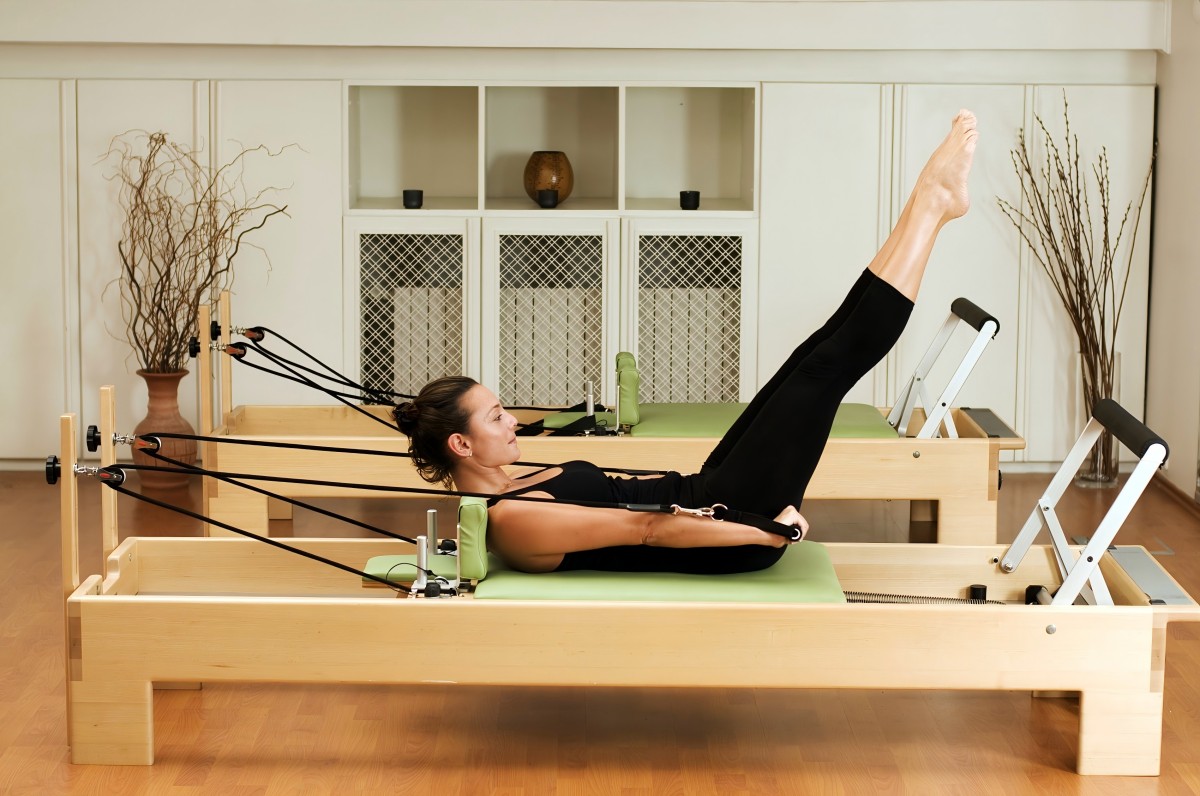
A Reformer can provide a sliding carriage and adjustable spring resistance for selected supervised exercises involving controlled trunk and limb movement.
A Tower configuration may offer additional spring attachment positions and training setups. However, a Full Tower is not automatically more effective than a standard Reformer.
Knee Osteoarthritis and Lower-Limb Function
Exercise is widely used in knee osteoarthritis management. Pilates may be considered as one exercise approach within an individualized care program.
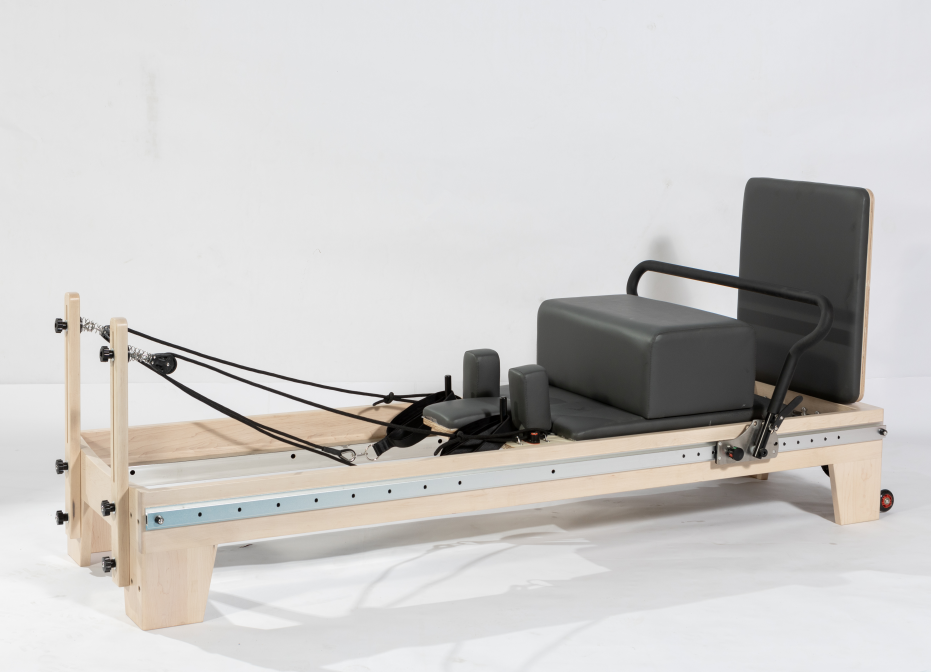
A Reformer offers a footbar, moving carriage, and adjustable spring system that can be configured for different lower-limb exercises.
Exercise range, knee position, spring tension, and symptom response must be monitored. No universal spring setting is appropriate for every person with knee osteoarthritis.
Post-Surgical Rehabilitation
Pilates equipment should only be incorporated after the individual has received clearance from the responsible clinical team.
A Reformer may allow selected supported exercises, while Tower attachments can provide additional resistance directions and exercise positions when permitted.
The equipment itself does not determine whether a movement is safe after surgery. The surgical procedure, healing stage, load restrictions, and rehabilitation protocol take priority.
Neurological and Balance-Related Training
Pilates-based movement may be incorporated into selected supervised programs focused on posture, coordination, and functional control.
For clients with impaired balance or reduced mobility, instructors must assess transfer safety, body support, supervision requirements, and whether the equipment provides a suitable training environment.
3. Rehabilitation Stages and Exercise Progression
Rehabilitation does not follow one universal timeline. Progression depends on medical clearance, functional assessments, exercise tolerance, and the goals established by the treating professional.
| Stage | General Exercise Focus | Equipment Selection Considerations |
|---|---|---|
| Medical Assessment / Acute Phase | Establishing clinical stability and determining eligibility | Reformer exercise may be inappropriate until medically cleared |
| Early Approved Movement | Supported movement, limited exercise complexity, and controlled positions | Accessible Reformer setup and closely supervised movement |
| Functional Recovery | Progressive strength, coordination, endurance, and movement range | Reformer or Tower configuration based on specific exercise requirements |
| Advanced Functional Training | More complex movement patterns, strength development, and functional capacity | Expanded Reformer and Tower exercise options when appropriate |
| Long-Term Exercise Maintenance | Sustainable strength, mobility, and movement confidence | Equipment chosen for the individual's long-term training goals |
How Should Exercises Progress?
Progression may involve modifying one or more of the following:
-
Exercise range of motion
-
Body position and support
-
Spring tension and resistance direction
-
Number of repetitions and training duration
-
Movement speed and control requirements
-
Coordination demands
-
Exercise complexity and functional relevance
Progress should be based on the individual's response rather than on a fixed timetable.
4. Pilates Reformer vs Half Tower vs Full Tower for Rehabilitation-Oriented Training
Reformer, Half Tower, and Full Tower machines offer different training configurations.
A larger structure does not necessarily indicate a higher rehabilitation level. Each type provides a different range of exercise options.
| Equipment | Main Components | Potential Training Applications | Buyer Considerations |
|---|---|---|---|
| Pilates Reformer | Sliding carriage, resistance springs, footbar, ropes, and straps | Supported resistance exercises, lower-limb training, and trunk control | Carriage stability, spring adjustment, frame height, and accessibility |
| Reformer with Half Tower | Reformer plus a half-height tower and additional attachment points | Combined carriage exercises and selected tower spring movements | Tower configuration, spring attachment locations, available accessories |
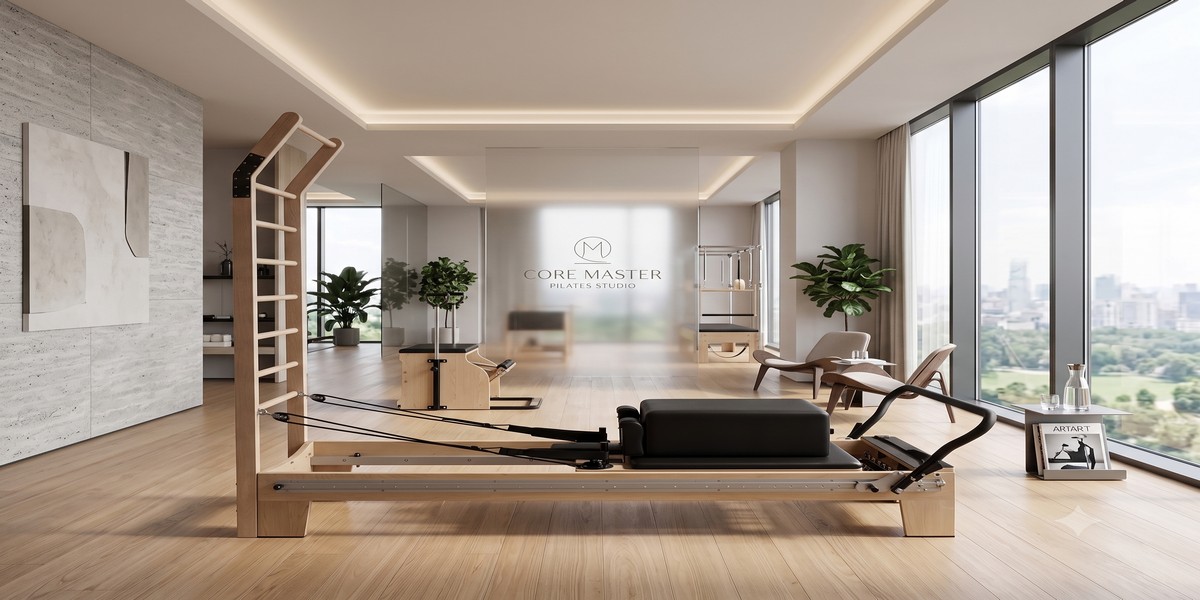
| Reformer with Full Tower | Reformer plus a full-height tower structure and associated exercise components | Wider range of tower-supported positions, spring directions, and exercise combinations | Tower stability, safety components, clearances, and accessory compatibility |
When to Choose a Standard Reformer
A standard Pilates Reformer may be suitable for facilities primarily offering supervised carriage-based strengthening and movement-control exercises.
Important selection factors include adjustable resistance, comfortable support surfaces, dependable carriage travel, and safe equipment access.
When to Choose a Reformer with Half Tower
A Half Tower Reformer adds tower-based spring attachments to the conventional Reformer structure.
This configuration may be useful when a facility wants to expand its exercise options without selecting a full-height tower system.
Buyers should verify which bars, springs, ropes, and attachment points are included with the selected model.
When to Choose a Reformer with Full Tower
A Full Tower Reformer provides a full-height tower structure that supports a broader range of compatible spring and bar arrangements.
This may be useful for facilities planning different supervised training positions and exercise variations.
Buyers should verify tower height, frame construction, bar configurations, safety restraints, spring attachments, and installation requirements.
Note: A Full Tower Reformer and a Cadillac Reformer 3-in-1 are distinct equipment configurations. Product specifications and included accessories must be evaluated separately.
5. Understanding Spring Resistance in Rehabilitation Training
Spring resistance is one of the most important features of a Pilates Reformer.
Unlike a fixed-weight exercise machine, a Reformer uses springs whose force changes with extension. The actual exercise load also depends on attachment geometry, carriage position, spring condition, and the direction of movement.
Therefore, choosing a spring solely by its color is not a reliable way to determine exercise difficulty.
Spring Selection Factors
| Factor | Why It Matters |
|---|---|
| Spring Resistance Characteristics | Determines how force changes as the spring extends |
| Number of Connected Springs | Changes the combined resistance available during an exercise |
| Spring Attachment Position | Affects the direction and behavior of the applied force |
| Exercise Position | Changes the mechanical demands on the user |
| Available Range of Motion | Helps the professional select a suitable movement range |
| Movement Control | Influences whether the user can perform the movement safely |
| User Tolerance | Guides individual exercise modification and progression |
Are Lighter Springs Always Better for Rehabilitation?
Not necessarily.
In some movements, reducing spring resistance decreases the force required to move the carriage. In others, lower spring tension may provide less assistance or change the amount of control needed to stabilize the carriage.
A heavier spring also does not automatically mean an exercise is more advanced or more appropriate for a stronger individual.
Spring selection must consider the complete exercise setup.
Questions Buyers Should Ask About Springs
Facilities purchasing rehabilitation-oriented Pilates equipment should request:
-
Spring quantities included with each model
-
Resistance data and measurement conditions
-
Spring materials and manufacturing specifications
-
Compatible attachment positions
-
Replacement spring availability
-
Recommended inspection and replacement guidance
-
Spring warranty information
Naisen can provide product-specific spring configuration information for equipment inquiries. Available resistance specifications should be verified against the selected model before ordering.
6. Pilates Reformer and Tower Accessories for Different Training Requirements
Accessories can increase the number of training configurations available on a Reformer or Tower machine.
However, accessory selection must reflect the equipment's actual design, the intended exercise, and the individual's safety requirements.
| Accessory | Training Function | Purchasing Considerations |
|---|---|---|
| Adjustable Footbar | Provides different foot support and exercise positions | Adjustment range, locking system, and contact surface |
| Jump Board | Creates a broader foot-contact platform for selected Reformer exercises | Dimensions, cushioning, grip, and compatible model |
| Sitting Box | Supports selected seated positions and exercise variations | Dimensions, stability, upholstery, and weight |
| Double-Loop Straps | Connect hands or feet to the rope resistance system | Strap materials, length, comfort, and durability |
| Ropes & Pulley System | Transfers force between the user and spring-loaded carriage | Rope construction, pulley operation, and replacement availability |
| Padded Shoulder Rests | Provide positioning and contact support during selected exercises | Removability, upholstery, and comfort |
| Adjustable Headrest | Supports positioning during appropriate exercises | Available adjustment positions and padding |
| Tower Springs | Provide resistance for compatible tower exercises | Spring specifications, attachment points, and compatibility |
| Push-Through Bar | Supports selected tower exercises and assisted movements | Safety strap, attachment mechanism, and manufacturer instructions |
| Roll-Down Bar | Used for selected controlled upper-body and trunk exercises | Bar material, spring compatibility, and grip |
| Mat Converters | Create a flatter exercise surface on compatible models | Fit, stability, attachment method, and included quantity |
| Foot Straps & Fuzzy Loops | Support selected strap-based exercises | Materials, dimensions, load specifications, and compatibility |
Not every accessory is included with every model. Standard configurations and optional components must be confirmed before purchase.
How Accessories Affect Facility Planning
A rehabilitation-oriented studio may need different accessories depending on whether its program emphasizes supported movement, lower-limb strengthening, trunk control, upper-body exercises, or more complex tower movements.
A clear accessory list helps buyers compare equipment based on its intended training capabilities instead of relying only on product appearance.
7. Safety and Accessibility Requirements
Safety should be a primary equipment-selection criterion for any facility serving people with physical limitations.
Equipment Access and Transfer Safety
Facilities should evaluate:
-
Equipment height and access requirements
-
Space available for instructor or therapist assistance
-
Ease of changing exercise positions
-
Stability of sitting boxes and other accessories
-
Availability of secure contact surfaces
-
Suitability for users who have balance or mobility limitations
Mechanical Safety
Important components include the frame, carriage wheels, guide rails, springs, pulleys, ropes, tower attachments, and locking mechanisms.
For Full Tower machines, the overhead structure and spring-loaded components require particular attention.
Buyers should request appropriate manufacturer instructions and documented specifications for:
-
Maximum user load
-
Equipment stability
-
Spring and strap inspection
-
Push-through bar safety mechanisms
-
Tower assembly and fastener requirements
-
Maintenance and replacement procedures
Any published load rating must be supported by product-specific testing or documentation.
Clinical Screening and Supervision
A qualified healthcare professional should assess whether Pilates exercise is appropriate for individuals with recent surgery, fractures, uncontrolled symptoms, significant neurological deficits, severe balance limitations, or other relevant medical concerns.
Equipment suppliers should not prescribe medical exercises or determine patient eligibility.
8. Maintenance, Spare Parts and Long-Term Equipment Use
For professional facilities, equipment maintenance affects safety, availability, and operating costs.
Recommended Maintenance Areas
| Component | Routine Inspection Focus |
|---|---|
| Resistance Springs | Wear, corrosion, distortion, and attachment condition |
| Ropes and Straps | Fraying, stitching damage, and excessive wear |
| Pulleys | Smooth rotation, unusual noise, and secure attachment |
| Carriage Wheels | Smooth movement, wear, and alignment |
| Guide Rails | Cleanliness, damage, and carriage travel |
| Footbar and Adjustment Mechanisms | Locking reliability and secure positioning |
| Tower Bars and Fasteners | Secure connections and structural condition |
| Upholstery | Surface wear, hygiene, and cleaning compatibility |
Inspection frequency and replacement intervals should follow the equipment manufacturer's guidance and the facility's usage intensity.
Why Spare Parts Matter for B2B Buyers
Rehabilitation-oriented studios and Pilates facilities may operate their equipment frequently.
When comparing suppliers, buyers should ask about replacement springs, ropes, straps, carriage wheels, upholstery components, warranty coverage, and spare-part shipping arrangements.
These factors can affect long-term equipment downtime and maintenance costs.
9. How to Choose a Pilates Reformer with Tower Supplier in China
For buyers searching for a China Reformer with Tower supplier for rehabilitation-oriented facilities, equipment specifications and supplier support are as important as price.
Commercial Purchasing Checklist
| Purchasing Factor | What to Confirm |
|---|---|
| Equipment Type | Standard Reformer, Half Tower, or Full Tower |
| Frame Construction | Material, structure, and available finishes |
| Dimensions | Product, installation, and packing dimensions |
| Spring Configuration | Quantity, resistance data, and replacement availability |
| Accessories | Standard inclusions and optional equipment |
| Safety Information | Tested load capacity, assembly guidance, and applicable documentation |
| Customization | Upholstery, color, logo, and permitted configuration changes |
| Packaging | Protection, carton or crate details, and shipment dimensions |
| Installation | Assembly requirements, instructions, and support availability |
| Warranty | Frame, spring, and component coverage |
| After-Sales Service | Spare parts, technical assistance, and claims procedures |
| Regulatory Requirements | Documentation appropriate to the product's intended use and destination market |
OEM and Customization Considerations
Naisen supports customization inquiries for Pilates equipment buyers, including selected upholstery colors, branding, and product configurations.
For facilities serving users with special accessibility or exercise requirements, buyers should communicate those requirements before ordering.
Not all modifications are compatible with every Reformer or Tower design.
Medical and Regulatory Considerations
A Pilates machine marketed for general exercise is not automatically an authorized medical rehabilitation device.
If equipment is intended or advertised for treating specific conditions, additional regulatory obligations may apply depending on the destination market.
Purchasers should review intended-use claims, safety documentation, and regulatory requirements before using equipment in medical treatment settings.
10. Frequently Asked Questions
Can a Pilates Reformer be used in a rehabilitation-oriented exercise program?
Yes, selected Reformer exercises may be included in professionally supervised programs when clinically appropriate. The individual's medical status, exercise restrictions, and functional goals determine suitability.
Is a Reformer with Full Tower better for rehabilitation than a standard Reformer?
Not necessarily. A Full Tower offers additional exercise configurations, but it does not automatically provide better clinical outcomes. Equipment should be selected according to the intended movements and facility requirements.
Which spring resistance is suitable for rehabilitation?
There is no universal spring color or tension for a particular medical condition. Resistance selection depends on the movement, spring properties, body position, required support, and professional assessment.
Can Pilates Reformers be used after knee or spinal surgery?
Only when the treating clinical team has approved the relevant exercises. Post-surgical restrictions vary widely, and equipment use must follow the patient's rehabilitation plan.
What accessories should a rehabilitation-oriented Pilates studio consider?
Common considerations include a stable footbar, comfortable shoulder supports, adjustable headrest, ropes, straps, spring options, a sitting box, and compatible tower accessories where needed.
Does a Full Tower Reformer include Cadillac 3-in-1 functions?
Not automatically. Full Tower Reformers and Cadillac Reformer 3-in-1 machines are separate product configurations. Buyers should compare the actual structure and included accessories.
What should buyers request from a Pilates equipment supplier?
Request technical specifications, confirmed spring configurations, accessory lists, installation instructions, applicable testing documents, warranty terms, spare-part information, and a quotation based on the selected equipment.
Can Naisen supply Pilates Reformers for rehabilitation-focused studios?
Naisen offers Pilates Reformers and Tower equipment for professional exercise facilities and wholesale buyers. Facilities should assess whether a selected model meets their operational, safety, and regulatory requirements.
Conclusion: Selecting Rehabilitation-Oriented Pilates Equipment
Choosing a Pilates Reformer with Tower for rehabilitation-oriented exercise involves more than selecting a machine with additional springs or accessories.
Buyers should evaluate the intended user population, functional training requirements, equipment accessibility, resistance options, safety features, maintenance needs, and supplier support.
A standard Reformer, Half Tower, or Full Tower may each be appropriate for different professionally supervised exercise programs. The right choice depends on how the facility intends to use the equipment and whether the selected configuration meets its technical and safety requirements.
Request Pilates Equipment Specifications from Naisen
Naisen supplies Pilates Reformers and Tower equipment for professional studios, distributors, and facility projects.
Contact our team to discuss equipment configurations, spring systems, accessories, customization, packaging, and international shipping requirements.
CONTACT US for product specifications, wholesale quotations, MOQ, and OEM customization details.
Which Pilates Reformer Is Best for Home Use? A Complete Buying Guide
Is Maple or Oak Better for a Pilates Reformer? A Manufacturer’s Guide
Related Article