What Is a Full-Track Pilates Reformer? Benefits, Differences & Buying Guide
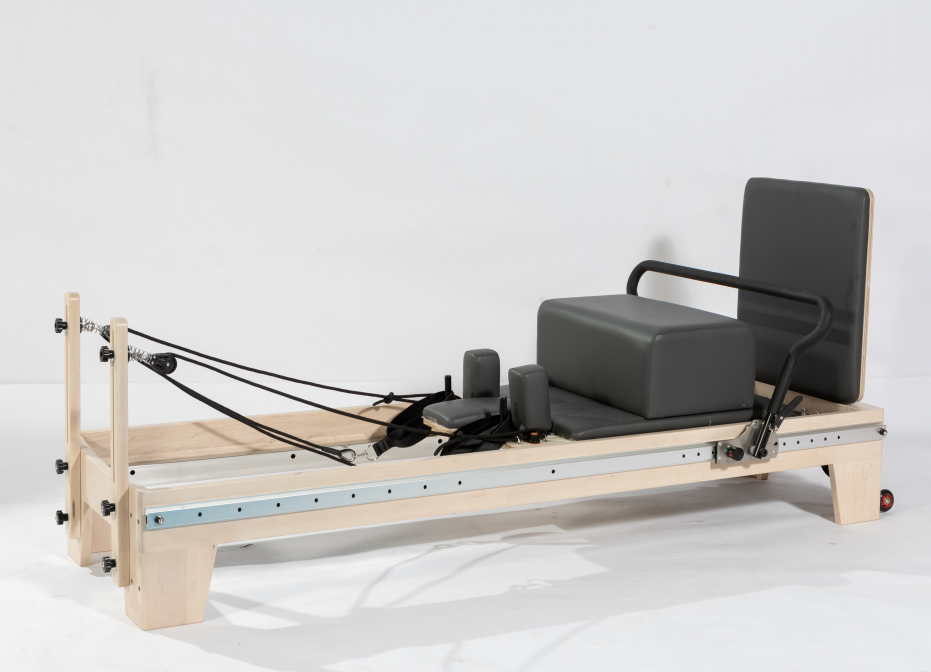
This distinction is important because not every Full-Track Reformer offers the same mechanical functionality.
For Pilates studio owners, private instructors, and equipment distributors, the real question is not simply whether a machine is labeled Full Track. It is whether its adjustment range, carriage travel, frame design, and accessories meet the intended training requirements.
This guide explains how Full-Track Reformers work, how they compare with conventional Reformers, their potential benefits, and what buyers should verify before purchasing.
1. What Is a Full-Track Pilates Reformer?
A Full-Track Pilates Reformer is a Reformer that incorporates a track system marketed as providing extended positioning or movement capability.
However, Full Track is not a universally standardized technical specification in the Pilates equipment market.
The term is used in two principal ways.
Full-Track Footbar Adjustment
In this configuration, the footbar assembly can be repositioned forward or backward along an extended track and secured at different locations.
This allows instructors to change the relationship between the footbar and carriage to accommodate different exercise setups.
The important feature is the movable footbar assembly and its locking system.
Full-Length Carriage Guide Rails
Other suppliers use Full Track to describe continuous or extended rails along which the carriage moves.
In this configuration, the track refers to the carriage guide system rather than the footbar adjustment mechanism.
Some manufacturers associate this design with longer carriage travel, but the actual movement distance must be measured.
Full Track Is Not the Same as Full Tower
These terms describe different systems.
| Term | Meaning |
|---|---|
| Full Track | Track-related adjustment or carriage-guidance design |
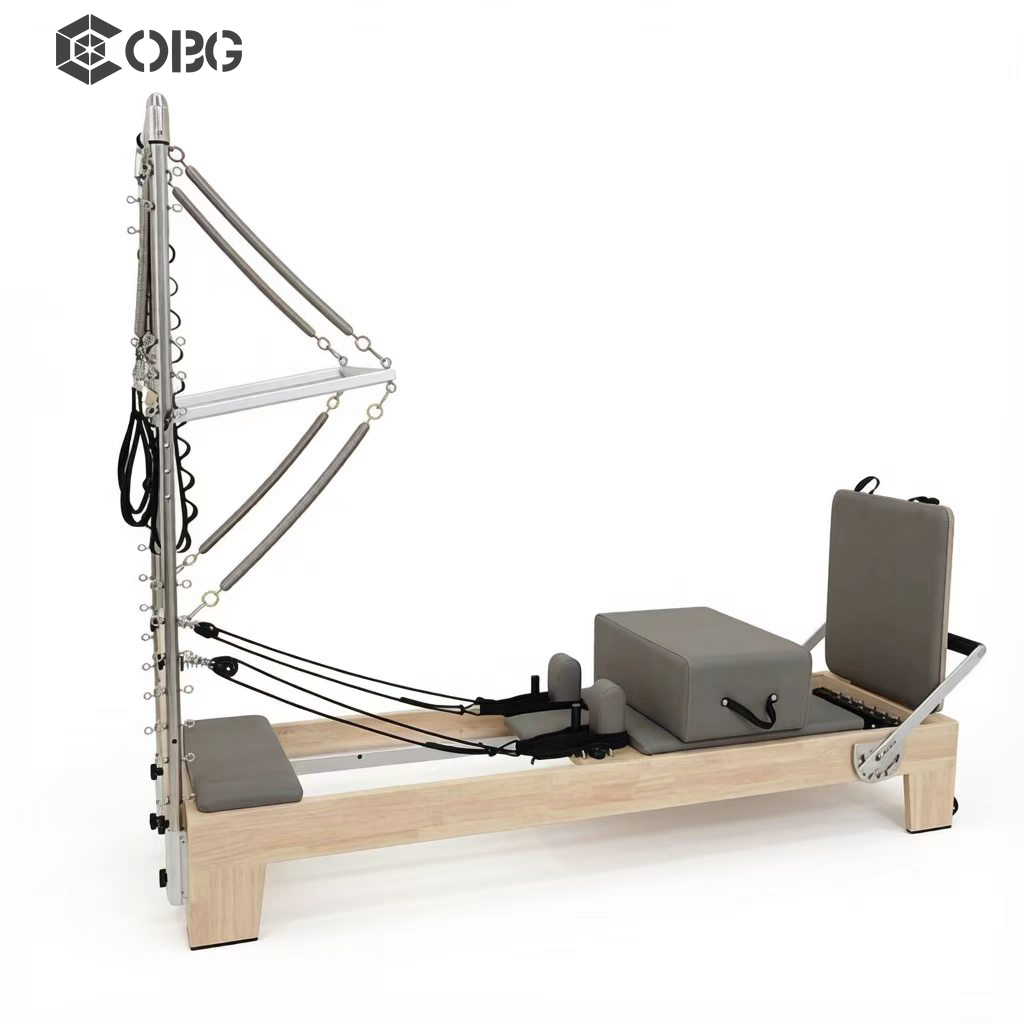
| Full Tower | Full-height tower structure attached to a Reformer |
| Half Tower | Partial-height tower attachment |
| Cadillac | Separate fixed-platform apparatus with an overhead trapeze structure |
| Full Guide Mold | Non-standard supplier terminology requiring structural clarification |
A Full-Track Reformer can be a standalone Reformer without any tower.
2. How Does a Full-Track Pilates Reformer Work?
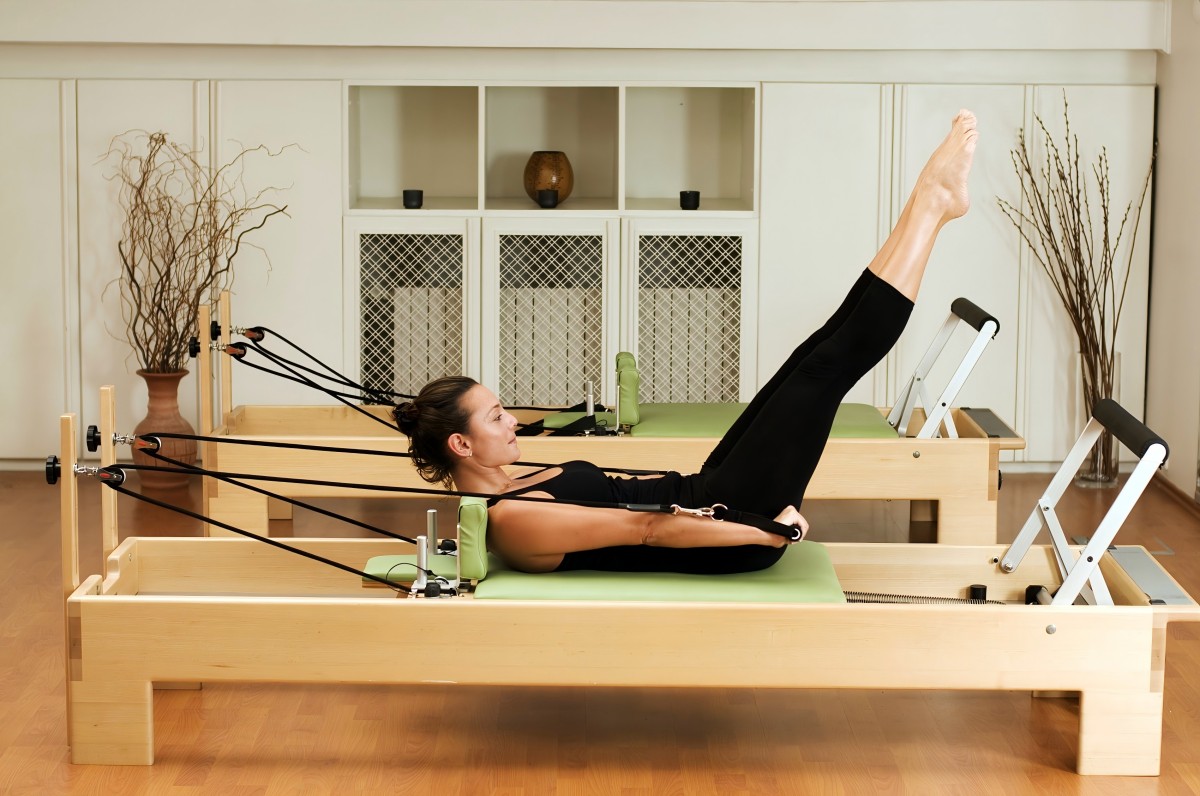
A Pilates Reformer combines several mechanical systems to create controlled, spring-resisted movement.
The most important components are:
-
Frame: Provides the primary supporting structure.
-
Carriage: The moving platform used during exercises.
-
Guide Rails: Direct carriage movement along the machine.
-
Carriage Wheels: Roll along the guide system.
-
Resistance Springs: Provide force that changes as the springs extend.
-
Footbar: Offers a contact and support point for selected exercises.
-
Ropes and Pulleys: Transmit force during compatible exercises.
-
Adjustment and Locking Components: Secure the applicable footbar, spring, or accessory positions.
Footbar Travel vs Carriage Travel
These are two different measurements.
Footbar Travel is the distance through which a movable footbar assembly can be repositioned.
Carriage Travel is the usable distance that the moving carriage can cover during exercise.
A machine can have an extended footbar adjustment system without offering a longer carriage stroke.
Similarly, a Reformer may have long carriage guide rails without allowing its footbar assembly to move along the frame.
When comparing equipment, buyers should request both measurements separately.
3. Full-Track vs Standard Pilates Reformer: What's the Difference?
The difference depends on the specific Full-Track system being compared.
A conventional Reformer may use a footbar with several predetermined adjustment positions. It may also have continuous carriage guide rails.
A Full-Track model may add an extended footbar positioning mechanism, a different guide-rail arrangement, or another manufacturer-specific feature.
Full-Track vs Standard Reformer Comparison
| Feature | Full-Track Reformer | Standard Reformer |
|---|---|---|
| Footbar Positioning | May have a movable footbar assembly | Often uses defined mounting or adjustment positions |
| Carriage Guide Rails | May use extended rails | Also uses carriage guide rails |
| Carriage Travel | Must be measured by model | Must be measured by model |
| Movement Smoothness | Depends on rail, wheel, and bearing quality | Depends on the same factors |
| Spring Resistance | Depends on spring specifications | Depends on spring specifications |
| Exercise Variety | Depends on functional design and accessories | Depends on functional design and accessories |
| Maintenance | May include additional adjustment hardware | Depends on mechanical configuration |
| Price | Determined by actual construction and features | Determined by actual construction and features |
Does Full Track Mean Better Performance?
Not automatically.
A standard Reformer with accurately aligned rails, high-quality wheels, and a reliable footbar may perform better than a poorly manufactured Full-Track machine.
The value of the Full-Track configuration depends on whether its additional features provide a useful difference for the intended users.
4. What Are the Main Benefits of Full-Track Reformer Pilates?
The potential advantages of a Full-Track Pilates Reformer depend on which mechanical system is provided.
Greater Footbar Positioning Flexibility
For models with a movable footbar assembly, an extended positioning track can provide additional setup options.
This may help instructors adjust the machine for different body proportions, starting positions, and exercise requirements.
The benefit is especially relevant to private instructors working with clients of different heights and training backgrounds.
Controlled Carriage Movement
A properly engineered carriage and guide-rail system supports controlled sliding movement during Reformer exercises.
Rail alignment, wheel construction, bearings, and frame rigidity influence how smoothly the carriage moves.
Full Track alone does not prove superior carriage performance.
Additional Setup Options
Certain Full-Track configurations allow instructors to make adjustments that are not available on some conventional designs.
These options may be useful when transitioning between different exercises or adapting equipment to different participants.
Potential Benefits for Professional Studios
For studios serving multiple users every day, positioning flexibility and reliable mechanical adjustments can be valuable.
However, buyers should also evaluate adjustment speed, locking security, wear components, and staff familiarity with the system.
Equipment Inspection and Maintenance
Accessible track components may make selected inspections easier, depending on the design.
Regular inspection should cover guide rails, wheels, bearings, locking mechanisms, and other moving parts.
Ease of maintenance should be evaluated on the specific model rather than assumed from the Full-Track label.
5. How Can Full-Track Design Support a More Versatile Pilates Workout?
Pilates Reformer exercises include a wide range of movements involving the legs, arms, trunk, and coordinated whole-body control.
A Full-Track system may influence how instructors configure the machine for these exercises.
However, most of the following exercise categories are also available on standard Reformers.
| Training Category | How Reformer Components Are Used | Possible Full-Track Relevance |
|---|---|---|
| Footwork | Footbar, carriage, and resistance springs | Movable footbar may provide additional starting positions |
| Leg Strap Exercises | Ropes, straps, pulleys, and carriage | Carriage travel and spring setup affect available movement |
| Arm Resistance Exercises | Ropes, straps, and springs | Exercise positioning depends on the complete machine |
| Core Control Exercises | Carriage resistance and body positioning | Track and carriage stability influence movement control |
| Stretching and Mobility | Footbar, carriage, and compatible accessories | Positioning flexibility may support selected exercise variations |
| Kneeling and Seated Exercises | Carriage, spring resistance, and accessories | Available setup depends on usable carriage space and support |
Does Full Track Create More Exercise Types?
Not necessarily.
A Full-Track configuration may make certain adjustments easier or provide additional positioning options.
But the overall training repertoire is also determined by the available springs, footbar positions, straps, pulleys, carriage dimensions, and accessories.
A wider range of adjustment does not automatically mean a better workout or greater clinical benefit.
Is Full Track Better for Taller Users?
It may be useful when the equipment provides a wider footbar positioning range or longer usable carriage travel.
Nevertheless, buyers should evaluate actual dimensions, including frame length, carriage stroke, shoulder-rest position, and rope adjustment range.
The Full-Track name alone does not guarantee suitability for taller practitioners.
6. Maple Wood vs Aluminum Full-Track Pilates Reformers
Full-Track construction and frame material are separate product characteristics.
Both wooden and aluminum Reformers may incorporate extended track or footbar adjustment systems.
Frame Material Comparison
| Feature | Maple Wood Reformer | Aluminum Reformer |
|---|---|---|
| Appearance | Natural timber finish | Modern metal-frame appearance |
| Frame Material | Maple-based construction | Aluminum alloy construction |
| Track Configuration | Depends on the model | Depends on the model |
| Equipment Weight | Must be verified by model | Must be verified by model |
| Upholstery | Available in different specifications | Available in different specifications |
| Maintenance | Frame finish and moving components | Connections, surfaces, and moving components |
| Customization | Selected colors, materials, and branding | Selected finishes, upholstery, and branding |
Maple Full-Track Pilates Reformers
Maple Reformers may appeal to Pilates studios seeking a traditional wooden appearance.
When evaluating a maple Full-Track machine, check the frame construction, rail installation, carriage design, spring system, and footbar configuration.
A visible metal rail on the exterior of a wooden frame does not establish the full extent of the machine's adjustment or movement range.
Aluminum Full-Track Pilates Reformers
Aluminum models may suit studios preferring contemporary metal-frame equipment.
The supplier should confirm the actual alloy frame design, rail and footbar system, machine weight, adjustment features, and product-specific warranty.
An aluminum frame is not automatically lighter or more durable than a wooden frame. The complete construction must be compared.
7. How Much Does a Full-Track Pilates Reformer Cost?
The price of a Full-Track Pilates Reformer depends on the exact machine design, components, accessories, order quantity, and shipping arrangements.
Without comparing equivalent specifications and current quotations, it is not possible to state that every Full-Track model costs more than a conventional Reformer.
Main Factors Affecting Price
| Cost Factor | What Buyers Should Compare |
|---|---|
| Frame Material | Maple, other wooden options, or aluminum |
| Track and Footbar System | Rail design, movable mechanisms, adjustment range, and locking system |
| Carriage Components | Wheels, bearings, upholstery, and construction |
| Spring Package | Quantity, resistance specifications, and manufacturer |
| Accessories | Sitting box, jump board, straps, and optional components |
| Customization | Frame finish, upholstery colors, and logos |
| Packaging | Packed volume, protection, and package quantity |
| Transportation | Freight, destination, import duties, and local delivery |
| Order Quantity | Single-unit pricing versus bulk quotations |
Standard vs Full-Track Reformer: Is the Upgrade Worth It?
For a studio purchasing ten Reformers, even a modest difference in unit price may affect the total project budget.
However, a more adjustable model may be worthwhile if its extra positioning options are regularly used in classes or private sessions.
Before paying more, ask the supplier:
-
What feature is added by the Full-Track design?
-
How much additional adjustment does it provide?
-
Does the usable carriage stroke change?
-
How does the locking mechanism operate?
-
Are replacement parts available?
-
Does the additional feature require more maintenance?
The best decision depends on measurable differences rather than marketing terminology.
Calculate the Total Purchasing Cost
Total Landed Cost = Equipment Price + Packaging + Freight + Import Charges + Local Delivery
Studio buyers should also consider installation, maintenance, and spare parts.
Naisen can provide current quotations based on the selected model, order quantity, customization requirements, and destination.
8. How to Evaluate Guide Rail Quality and Technical Specifications
For professional buyers, the technical specifications are often more important than the product name.
Guide Rail and Carriage Inspection
| Technical Feature | What to Evaluate |
|---|---|
| Rail Material | Material grade and surface construction |
| Rail Straightness | Alignment along the intended movement path |
| Carriage Wheels | Number, material, and replacement compatibility |
| Bearings | Smoothness, noise, and serviceability |
| Carriage Stability | Unwanted lateral movement or vibration |
| Usable Carriage Travel | Measured movement distance |
| Footbar Travel | Actual repositioning range, if applicable |
| Locking System | Secure engagement at supported positions |
| Spring Configuration | Quantity, resistance data, and attachment method |
| Maintenance | Cleaning access and replacement procedures |
Why the Locking Mechanism Matters
If a Full-Track model includes a movable footbar assembly, the ability to secure the footbar reliably is essential.
Buyers should request a demonstration showing how the footbar is unlocked, repositioned, and locked into place.
Adjustment convenience should never come at the expense of secure operation.
Why Wheel Quantity Alone Is Not Enough
Some Reformer models use an eight-wheel carriage system.
Wheel quantity describes the number of carriage rollers, not the complete quality of the sliding system.
Bearing performance, wheel material, guide-rail precision, load distribution, and maintenance are also important.
Request a Technical Demonstration
A useful supplier demonstration should show:
-
The complete assembled machine
-
Footbar adjustment and locking
-
Full carriage movement
-
Rail and wheel arrangement
-
Spring installation and changes
-
Accessories included
-
Assembly and maintenance access
This helps buyers compare actual product functionality rather than relying only on photographs.
9. Who Should Buy a Full-Track Pilates Reformer?
Different buyers may value different aspects of the machine.
Pilates Studio Owners
Studio owners should focus on equipment consistency, daily operating reliability, adjustment convenience, maintenance, and cost per training station.
A Full-Track model may be attractive when instructors need additional positioning options for different clients.
Private Pilates Instructors
Private instructors frequently adjust equipment between clients.
A movable footbar configuration may be useful if the available positions help support their teaching repertoire.
Home Pilates Practitioners
Home buyers should focus on training familiarity, room dimensions, ease of use, safety, equipment weight, and total delivery cost.
Full Track is not a requirement for effective home Reformer training.
Pilates Equipment Distributors
Distributors should evaluate product differentiation, documentation, OEM options, unit pricing, packaging, parts availability, and consistent supply.
Clearly explaining the actual track mechanism can help prevent misunderstandings with downstream customers.
10. Full-Track Pilates Reformer Buying Checklist
Before placing an order, confirm the following specifications.
| Specification | Information to Request |
|---|---|
| Product Type | Exact Full-Track configuration |
| Track Definition | Movable footbar, extended carriage rail, or both |
| Frame Material | Maple, aluminum, or another material |
| Guide Rail Material | Material and construction |
| Footbar Adjustment Range | Actual movement distance and available locking positions |
| Carriage Travel | Usable sliding distance |
| Carriage Wheels | Quantity and specifications |
| Spring System | Number, resistance characteristics, and replacements |
| Upholstery | Material, thickness, and available colors |
| Product Dimensions | Length, width, and height |
| Packing Dimensions | Length, width, height, and package quantity |
| Weight | Net and gross weights |
| Maximum User Weight | Documented model-specific load rating |
| Accessories | Standard package and optional upgrades |
| Warranty | Frame, springs, and other applicable components |
| OEM Services | Logo, upholstery, packaging, and supported modifications |
| Shipping | Delivery terms and destination-specific costs |
Buyers should request a written specification sheet and current quotation for the exact model.
11. Frequently Asked Questions About Full-Track Pilates Reformers
What is a Full-Track Pilates Reformer?
It is a Reformer marketed with an extended track or adjustment system. Depending on the manufacturer, this may refer to movable footbar positioning, carriage guide-rail construction, or both.
Is a Full-Track Reformer better than a standard Reformer?
Not automatically. Performance depends on adjustment functionality, guide-rail quality, carriage construction, springs, accessories, and maintenance.
Does Full Track mean longer carriage travel?
Not necessarily. Some manufacturers use Full Track to describe footbar repositioning rather than carriage movement. Ask for both measurements.
What is the difference between Full Track and Full Tower?
Full Track describes a track-related mechanical configuration. Full Tower refers to a full-height tower structure that adds compatible spring and bar exercises.
Is a Full-Track Pilates Reformer suitable for beginners?
It can be suitable when its operating characteristics, adjustments, and exercises are appropriate for the user. Beginners should receive qualified instruction before independent use.
Can a wooden Pilates Reformer have a Full-Track system?
Yes. Track configuration and frame material are independent specifications. Wooden and aluminum models may both use Full-Track arrangements.
Does a Full-Track Reformer provide a full-body workout?
A Pilates Reformer can support exercises involving different muscle groups and movement patterns. The Full-Track feature itself does not determine the overall exercise repertoire.
What affects the price of a Full-Track Pilates Reformer?
Frame construction, track mechanism, carriage components, springs, accessories, customization, packaging, and freight all affect pricing.
What should distributors verify before ordering?
Distributors should confirm the precise track design, footbar and carriage travel, technical specifications, tested load capacity, packaging, MOQ, customization, and spare-part availability.
12. Explore Full-Track Pilates Reformers from Naisen
Naisen supplies Pilates equipment for professional studios, private instructors, distributors, and wholesale buyers.
Available equipment categories include wooden Reformers, aluminum Reformers, foldable Reformers, and Tower configurations.
For buyers evaluating a Full-Track design, Naisen can assist with product identification, technical specifications, compatible accessories, available customization, and international shipping arrangements.
Before ordering, confirm the exact Full-Track mechanism and associated measurements for the selected model.
Request a Full-Track Pilates Reformer Quotation
Tell us your preferred frame material, equipment quantity, destination country, and required training configuration.
CONTACT US for current product specifications, MOQ, OEM customization, packaging details, and wholesale pricing.
How to Buy Pilates Reformers in Bulk for a New Studio
Related Article