How to Buy Pilates Reformers in Bulk for a New Studio
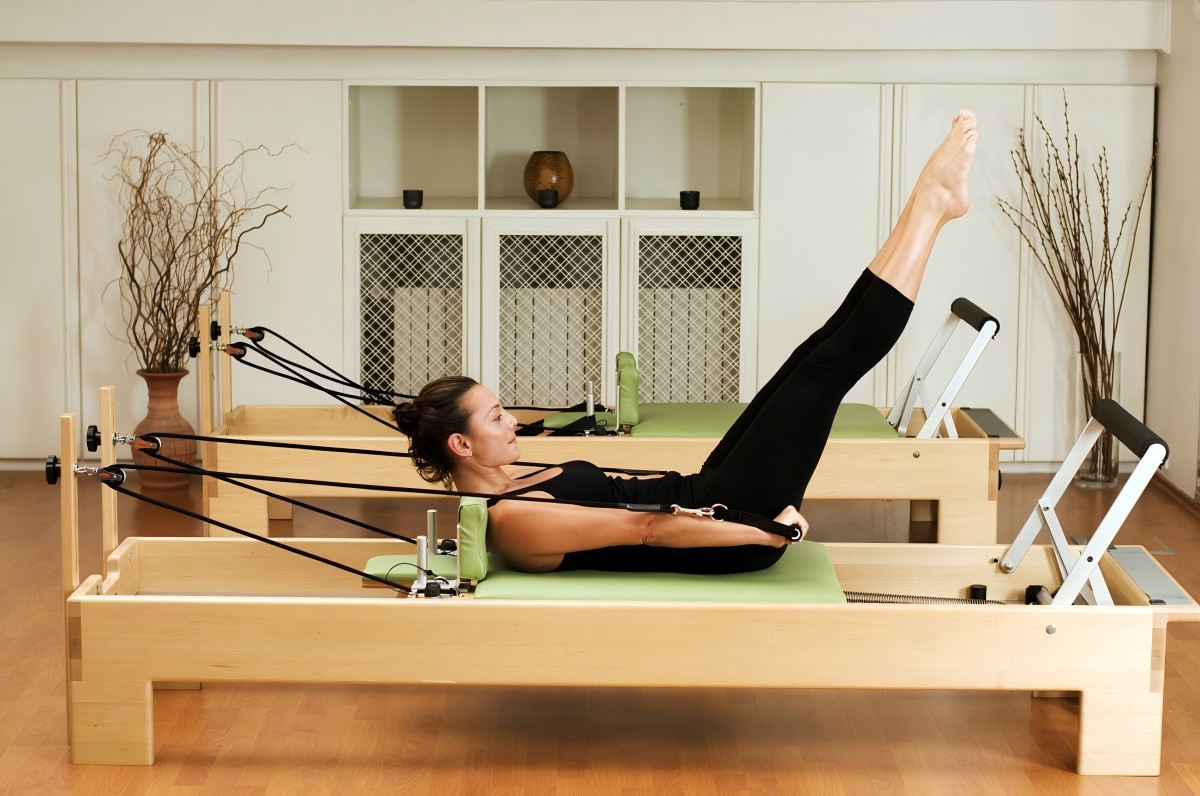
How to Buy Pilates Reformers in Bulk for a New Studio
Opening a Pilates studio requires more than selecting attractive exercise equipment. Your equipment choices influence class capacity, teaching methods, studio layout, maintenance expenses, and the amount of capital needed before opening.
For a studio owner planning to purchase 5, 8, 10, or more Pilates Reformers, buying in bulk can simplify equipment standardization, shipping arrangements, and long-term spare-parts management.
However, the lowest unit price does not always produce the lowest overall project cost.
This guide explains how to choose commercial Pilates Reformers, plan your studio layout, compare equipment configurations, calculate purchasing costs, and evaluate suppliers before placing a bulk order.
1. How Many Pilates Reformers Does a New Studio Need?
The right number of Reformers depends on your planned class size, available floor area, instructor capacity, and business model.
A boutique studio offering small-group classes has different requirements from a large facility focused on high-capacity Reformer sessions.
Choosing Equipment Quantity by Studio Concept
| Planned Equipment Quantity | Potential Studio Setup | Main Purchasing Consideration |
|---|---|---|
| 4–5 Reformers | Small boutique studio or private training room | Lower initial equipment commitment and flexible teaching |
| 6–8 Reformers | Small-group Reformer studio | Balanced class capacity and instructor supervision |
| 9–10 Reformers | Larger group-class studio | Space planning, instructor visibility, and equipment consistency |
| 12–20+ Reformers | Larger studio or multi-room project | Bulk logistics, standardized maintenance, and installation planning |
These are illustrative planning scenarios, not mandatory class sizes or building-capacity recommendations.
Actual capacity must reflect room dimensions, instructor supervision, emergency access, local regulations, and the equipment manufacturer's clearance requirements.
Why Equipment Quantity Affects Studio Profitability
Every additional Reformer creates another potential class position, but it also increases purchasing, maintenance, and space requirements.
For example, a studio planning eight Reformer positions should evaluate whether expected class bookings justify the additional equipment, space, and staffing costs.
Before ordering, consider:
-
Expected number of classes per day
-
Target number of participants per class
-
Instructor-to-participant supervision requirements
-
Private versus group training
-
Available operating hours
-
Realistic membership and class demand
Buying recommendation: Finalize your teaching model and approximate class capacity before requesting equipment quotations.
2. Which Pilates Reformer Type Is Best for a Commercial Studio?
Commercial Pilates equipment is available in several configurations.
A standard Reformer, Half Tower Reformer, Full Tower Reformer, standalone Cadillac, and Cadillac Reformer Combo are not interchangeable products.
Each offers different exercise options and operating requirements.
Commercial Pilates Equipment Comparison
| Equipment Type | Training Focus | Suitable Studio Concept | Main Consideration |
|---|---|---|---|
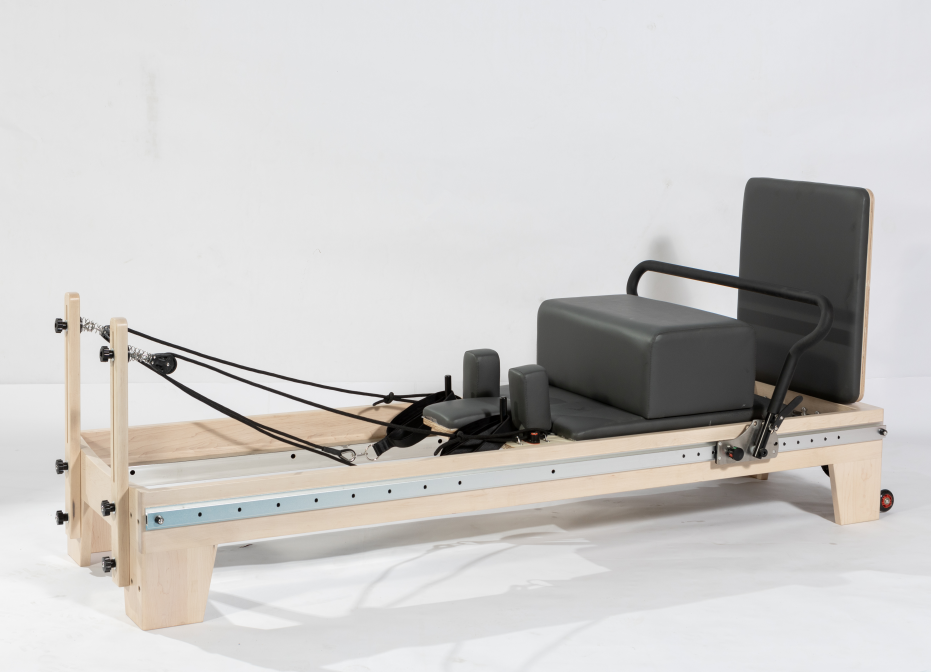
| Standard Pilates Reformer | Carriage-based Reformer exercises | Reformer group classes | Equipment consistency, adjustment speed, and maintenance |
| Foldable Pilates Reformer | Reformer exercises with compact storage capability | Multipurpose rooms or space-limited facilities | Folding mechanism, storage, and handling |
| Reformer with Half Tower | Reformer training plus selected tower spring exercises | Mixed Reformer and Tower programs | Tower accessories, training requirements, and space |
| Reformer with Full Tower | Reformer training plus full-height tower exercises | Studios offering a wider Tower repertoire | Vertical clearance, assembly, and safety |
| Standalone Pilates Cadillac | Fixed-bed trapeze and spring exercises | Private sessions and dedicated Cadillac instruction | Specialized training and equipment footprint |
| Cadillac Reformer Combo / 3-in-1 | Multiple convertible training configurations | Multi-purpose private training spaces | Conversion mechanism, complexity, and maintenance |
Standard Reformers for Group Classes
For studios primarily offering Reformer group classes, standard commercial Reformers are often a practical choice.
Using consistent machines can simplify instructor preparation, spring changes, exercise modifications, and staff training.
Buyers should compare carriage performance, spring specifications, adjustment mechanisms, frame construction, and replacement-part availability.
Half Tower Reformers for Expanded Training
A Half Tower adds tower-based spring attachment options to a traditional Reformer.
This can be useful for studios that want to offer selected Tower exercises alongside regular Reformer classes.
Before purchasing multiple Half Tower machines, confirm the included tower springs, bars, ropes, and attachment configurations.
Full Tower Reformers for Specialized Programs
A Full Tower provides additional tower structure and compatible exercise positions.
It may be useful for studios offering advanced Tower instruction, specialist classes, or private sessions.
However, Full Tower machines require careful consideration of ceiling height, assembly, and safe operation.
Important: A Full Tower Reformer is not automatically a Cadillac Reformer Combo or 3-in-1 machine. These configurations should be compared separately.
Should Your Studio Buy Only One Equipment Type?
Not necessarily.
Some studios standardize their group-class room with conventional Reformers and place a Half Tower, Full Tower, or Cadillac in a separate private training area.
Others use a consistent Tower Reformer configuration throughout the studio.
The best equipment mix depends on the actual classes you intend to offer, not simply on the number of available functions.
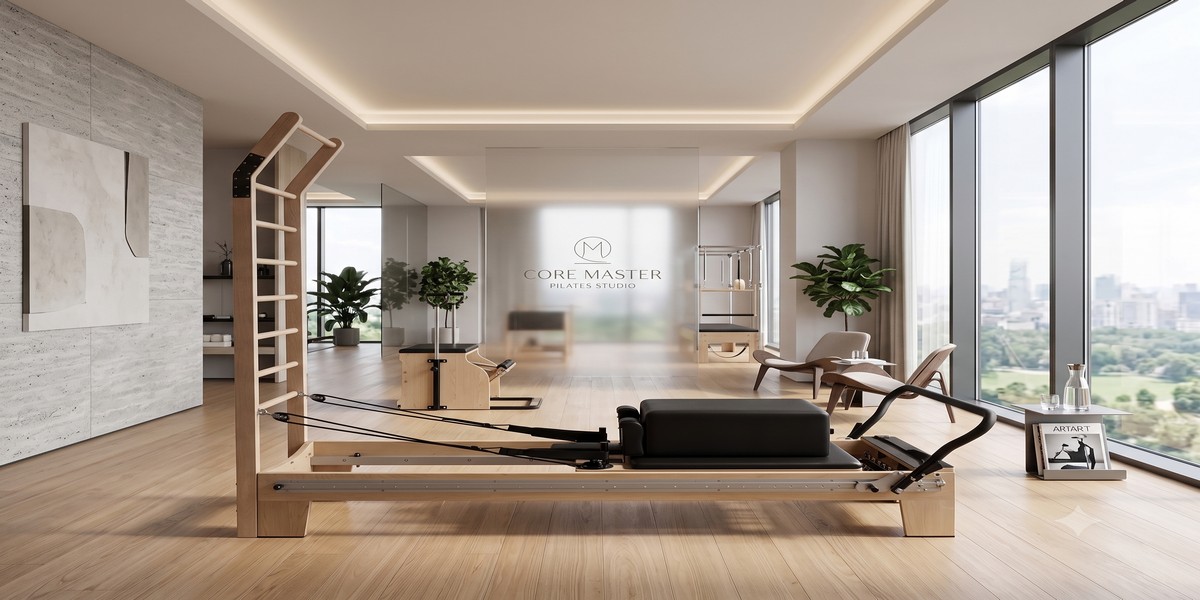
3. How Much Space Do You Need for 5–10 Pilates Reformers?
Studio layout should be planned before equipment is ordered.
A Reformer may fit physically inside a room without leaving enough clearance for instructors, exercise movements, or emergency access.
Key Studio Layout Measurements
| Measurement | Why It Matters |
|---|---|
| Equipment Length | Determines the primary floor footprint |
| Equipment Width | Affects spacing between machines |
| Working Clearance | Allows exercises, instructor assistance, and access |
| Ceiling Height | Essential for Half Tower, Full Tower, and Cadillac configurations |
| Instructor Movement Area | Supports safe supervision and class management |
| Entrance and Delivery Route | Determines whether packed equipment can reach the room |
| Storage Area | Provides space for jump boards, sitting boxes, and other accessories |
| Emergency Access | Must meet applicable building and safety requirements |
Studio Layout Example
Consider a studio planning eight Reformers.
The owner should first obtain the exact dimensions of the selected model, then prepare a floor plan showing all eight machines.
The plan should include realistic working clearances, instructor movement routes, doors, storage, and any fixed building features.
Only after checking the full operational layout should the studio finalize its equipment quantity.
Should You Choose Foldable Reformers for a Commercial Studio?
Foldable Reformers can help facilities using the same room for different activities.
However, a foldable machine is not automatically the most efficient option for a studio that runs continuous Reformer classes.
Commercial buyers should compare setup time, folded dimensions, storage requirements, net weight, mechanical durability, and the practicality of repeated folding.
4. Wooden vs Aluminum Pilates Reformers for Commercial Use
Frame material is an important purchasing consideration, but it should not be the only basis for choosing a commercial Reformer.
Both wooden and aluminum models can be appropriate for professional use when their construction and specifications meet studio requirements.
Frame Material Comparison
| Purchasing Factor | Wooden Reformer | Aluminum Reformer |
|---|---|---|
| Appearance | Natural or finished timber appearance | Modern metal-frame appearance |
| Material Options | Selected maple, oak, and beech configurations | Different aluminum alloy constructions |
| Structural Quality | Depends on frame design, material, and joints | Depends on frame design, sections, and connections |
| Equipment Weight | Must be checked by model | Must be checked by model |
| Maintenance | Includes frame finish and structural inspection | Includes connection and surface inspection |
| Customization | Selected frame and upholstery options | Selected frame color and upholstery options |
What Matters More Than Frame Material?
When comparing commercial Reformers, prioritize:
-
Actual frame specifications
-
Carriage stability and smoothness
-
Rail alignment and durability
-
Spring resistance and replacement options
-
Footbar and headrest adjustment mechanisms
-
Upholstery quality and cleaning requirements
-
Tested maximum user weight
-
Written warranty terms
A wooden Reformer is not automatically more stable than an aluminum Reformer, and aluminum equipment is not necessarily lighter.
Ask for actual model specifications instead of relying on material-based marketing claims.
5. Spring Resistance: What Should Studio Owners Check?
A commercial Pilates studio serves people with different training experience, strength, movement control, and exercise preferences.
Spring configuration is therefore an important part of equipment selection.
Understanding Different Spring Resistance Levels
Naisen's factory reference specifications identify several Reformer spring types.
| Spring Color | Initial Force | Intermediate Force | Maximum Listed Force |
|---|---|---|---|
| Red | 3.16 kgf | 12.90 kgf | 27.80 kgf |
| Green | 2.24 kgf | 5.47 kgf | 14.50 kgf |
| Yellow | 1.58 kgf | 3.72 kgf | 8.40 kgf |
These are factory-provided measurements at specified test states. The corresponding extension distances and certified safe operating limits must be confirmed separately.
Why Studio Owners Should Compare Spring Systems
Commercial buyers should look beyond spring colors.
Different manufacturers may use different spring designs and resistance profiles, even when the colors look identical.
Before ordering, confirm:
-
The number of springs included per machine
-
Spring resistance specifications
-
Spring compatibility across models
-
Attachment and adjustment methods
-
Replacement spring availability
-
Inspection and maintenance guidance
-
Warranty coverage
For multi-unit studios, consistent spring systems can simplify equipment management and instructor familiarity.
Do Beginners Always Need Lighter Springs?
No.
The difficulty of a Reformer exercise depends on body position, carriage movement, spring extension, the number of springs connected, and the training objective.
More resistance is not always more difficult, and less resistance is not always more appropriate.
Instructors should select spring settings according to the actual exercise and participant needs.
6. Which Accessories Should Be Included in a Studio Reformer Order?
A bulk equipment quotation should clearly identify the included accessories.
Studio owners should not assume that every accessory shown in a product photograph is part of the standard package.
Commercial Reformer Accessories
| Accessory | Main Function | Purchasing Consideration |
|---|---|---|
| Sitting Box | Supports seated and box-based exercises | Inclusion, dimensions, and upholstery |
| Jump Board | Provides a platform for selected jumping exercises | Compatibility and surface material |
| Double-Loop Straps | Used for hand and foot exercises | Material, length, and durability |
| Padded Shoulder Rests | Provide positioning support | Upholstery and removability |
| Adjustable Headrest | Supports different exercise positions | Number of positions |
| Adjustable Footbar | Provides different foot-support positions | Locking system and adjustment range |
| Reformer Ropes & Pulleys | Support carriage-based exercises | Rope construction and replacement parts |
| Transport Wheels | Assist equipment repositioning | Number and handling requirements |
Additional Accessories for Tower Reformers
A Half Tower or Full Tower model may include additional spring assemblies, exercise bars, safety straps, and tower-specific accessories.
These components must be checked against the selected equipment configuration.
Why Accessory Standardization Matters
If a studio purchases ten machines with identical accessory configurations, instructors may find it easier to prepare consistent classes and manage spare parts.
It can also simplify inventory tracking when purchasing replacement ropes, straps, springs, and upholstery components.
Buying recommendation: Request a complete standard accessory list for every model included in the quotation.
7. How Much Does It Cost to Buy Pilates Reformers in Bulk?
The complete cost of equipping a Pilates studio includes more than the manufacturer's unit price.
Your total project budget should include equipment, accessories, transportation, import charges, installation, and a reasonable allowance for maintenance and spare parts.
Bulk Purchase Cost Breakdown
| Cost Item | What It Includes |
|---|---|
| Equipment Cost | Unit price multiplied by the number of machines |
| Accessory Cost | Optional jump boards, boxes, springs, and other components |
| Customization | Upholstery colors, logos, or approved configuration changes |
| Export Packaging | Cartons, protective materials, or crates |
| International Freight | Shipping to the destination country |
| Import Duties and Taxes | Destination-specific charges |
| Local Delivery | Transport from port or terminal to the studio |
| Installation | Assembly tools, labor, or technical support |
| Spare Parts | Replacement springs, ropes, and wear components |
| Contingency | Allowance for project changes or unexpected expenses |
Example: Estimating a 10-Reformer Studio Purchase
Use the following approach:
Equipment Cost = 10 × Quoted Unit Price
Total Landed Cost = Equipment + Accessories + Packaging + Freight + Import Charges + Local Delivery
Total Project Equipment Budget = Total Landed Cost + Installation + Initial Spare Parts + Contingency
Avoid comparing supplier quotations using unit price alone.
A lower equipment quotation may result in higher delivered costs if the packaging, freight arrangements, or destination charges differ.
EXW, FOB, CIF, and DDP: What Is the Difference?
| Trade Term | Basic Meaning for Buyers |
|---|---|
| EXW | Buyer takes on extensive collection, export, and transportation responsibilities |
| FOB | Seller delivers goods on board the vessel at the named shipment port |
| CIF | Seller arranges cost, insurance, and freight to the named destination port |
| DDP | Seller assumes agreed delivery and import responsibilities to the named destination place |
These are simplified descriptions. Buyers should check the applicable Incoterms 2020 rules, named place, destination requirements, and the exact quotation scope.
For a new studio owner with limited international purchasing experience, clarity about the final delivered cost is especially important.
8. How to Evaluate a Pilates Reformer Supplier in China
Finding a supplier is not only about searching for the lowest wholesale price.
Studio owners should confirm that the supplier can provide consistent equipment specifications, appropriate documentation, reliable packaging, and post-sale support.
Supplier Evaluation Checklist
| Evaluation Area | Questions to Ask |
|---|---|
| Business Identity | Who is the contracting supplier, and who manufactures the equipment? |
| Product Specifications | Can the supplier provide accurate dimensions, weights, materials, and spring information? |
| Manufacturing and Assembly | What processes are performed in-house? |
| Quality Inspection | What inspection procedures are applied before shipment? |
| Product Documentation | Are assembly instructions and applicable test reports available? |
| Customization | Which colors, upholstery materials, and logo options are supported? |
| Commercial Terms | What are the current MOQ, production time, and payment terms? |
| Packaging | How are frames, rails, upholstery, and accessories protected? |
| Warranty | Which parts are covered, and under what conditions? |
| Spare Parts | Can matching springs, ropes, wheels, and other components be supplied later? |
| Export Support | Which documents and shipping arrangements are available? |
Why Consistent Specifications Matter
When buying ten Reformers for one studio, inconsistencies between machines can create operational problems.
Buyers should check whether the supplier can provide the same frame configuration, spring system, upholstery, and accessory package throughout the order.
For customized projects, approved samples and written specifications help reduce misunderstandings before mass production.
Consider a Pre-Shipment Inspection
For larger studio projects, a pre-shipment inspection may help verify product quantities, appearance, key dimensions, packaging, and selected functional checks.
Inspection scope should be agreed upon before production or shipment.
9. OEM Customization for Pilates Studios
Many studio owners want equipment that matches their interior design and brand identity.
Common customization requests include:
-
Upholstery colors
-
Company or studio logos
-
Selected upholstery materials
-
Frame finishes where supported
-
Private-label branding
-
Packaging requirements
-
Selected accessory configurations
Which Customizations Should You Prioritize?
For a commercial studio, visual consistency is important, but functionality should come first.
Choose the equipment structure, dimensions, spring system, and required accessories before finalizing cosmetic changes.
Customized equipment may affect pricing, production timing, MOQ, and replacement-part compatibility.
All changes should be confirmed in the order specification.
10. Bulk Packaging, Shipping and Installation
International equipment purchases involve practical challenges that are easy to overlook.
Pilates Reformers are relatively large machines, and some models require partial assembly after delivery.
What to Request Before Shipment
Ask the supplier for a packing list containing:
-
Product name and quantity
-
Number of packages
-
Packing dimensions
-
Net and gross weights
-
Package type
-
Accessories included
-
Assembly requirements
-
Loading and handling instructions where applicable
Why Packing Volume Matters
Shipping cost can be influenced by cargo volume, gross weight, shipping mode, and destination.
For example, ten units with different packaging dimensions may occupy substantially different cargo volumes even if their unit prices are similar.
Request the actual packing dimensions for the selected product, not estimates based on unrelated models.
Pre-Assembled vs Fully Disassembled Machines
Some Reformers are shipped with their main frame and carriage system pre-assembled, while others require more extensive assembly.
For Tower Reformers, the tower structure and accessories may require additional installation.
Pre-assembly can reduce on-site work, but freight savings are not guaranteed. Final transportation costs depend on the actual packing configuration.
Studio Installation Planning
Before equipment arrives, confirm:
-
Delivery access to the property
-
Door, elevator, and stair dimensions
-
Required tools and assembly personnel
-
Instructions for securing tower structures
-
Final floor layout
-
Inspection procedures after installation
Machines should be inspected and correctly assembled before studio classes begin.
11. Warranty, Maintenance and Replacement Parts
For a commercial studio, after-sales service is part of the total purchasing decision.
Even durable equipment contains components that require regular inspection and eventual replacement.
Important Maintenance Components
| Component | Inspection Focus |
|---|---|
| Springs | Wear, corrosion, deformation, and attachment condition |
| Ropes | Fraying and changes in rope condition |
| Straps | Stitching, surface wear, and secure connections |
| Carriage Wheels | Smooth movement, alignment, and wear |
| Guide Rails | Cleanliness, damage, and smooth carriage travel |
| Footbar | Adjustment and locking function |
| Upholstery | Cleaning, surface wear, and damage |
| Tower Components | Fasteners, bars, safety straps, and attachment points |
Understanding Frame and Spring Warranties
Selected Naisen wooden and aluminum Reformer configurations have factory reference warranty terms of:
-
Reformer Frame: 10 years
-
Imported Piano-Wire Springs: 3 years
These periods are specific to applicable configurations and do not automatically cover every accessory, wear component, or product model.
Commercial buyers should request the written warranty terms for their exact equipment.
Why Spare Parts Should Be Included in Purchasing Discussions
Studio downtime can affect class scheduling and operating income.
Ask the supplier about spare springs, ropes, straps, carriage wheels, and replacement upholstery before purchasing.
This is particularly important for facilities operating multiple identical machines.
12. Should You Buy All Reformers from One Supplier?
Purchasing an entire studio's Reformer equipment from one supplier may simplify specification control, logistics, and spare-parts management.
However, buyers should still evaluate the supplier's technical capabilities, service quality, and commercial terms.
Potential Advantages
-
Consistent appearance across machines
-
Easier coordination of delivery and installation
-
More uniform spring and accessory configurations
-
Simplified spare-parts sourcing
-
Potentially more efficient bulk shipping arrangements
-
One primary contact for equipment-related questions
When Multiple Suppliers May Make Sense
Some studios require highly specialized equipment that a single supplier does not offer.
If purchasing from multiple suppliers, check differences in spring systems, accessories, maintenance procedures, and warranty administration.
13. What Information Should You Send When Requesting a Bulk Quote?
A detailed purchasing inquiry helps the supplier prepare a more accurate quotation.
Studio Equipment RFQ Checklist
| Information | Example |
|---|---|
| Project Type | New Pilates studio |
| Destination | Country and city |
| Required Quantity | 8 or 10 Reformers |
| Product Type | Standard Reformer / Half Tower / Full Tower |
| Preferred Material | Maple / Oak / Aluminum |
| Upholstery Color | Custom studio color |
| Accessories | Sitting boxes, jump boards, straps |
| Branding | Studio logo |
| Delivery Terms | FOB, CIF, or requested delivery arrangement |
| Installation Support | Assembly instructions or additional assistance |
| Target Delivery Date | Planned studio opening schedule |
| Other Requirements | Spare springs, replacement straps, or special packaging |
The more complete your request, the easier it is to compare supplier quotations fairly.
14. Frequently Asked Questions
How many Reformers should I buy for a new Pilates studio?
The quantity depends on available space, class structure, instructor supervision, and your business model. Small studios may begin with 4–8 units, while larger facilities may plan 10 or more. These are examples rather than fixed recommendations.
Is it cheaper to buy Pilates Reformers in bulk?
Bulk purchasing may improve shipping efficiency and simplify procurement. Any unit-price discount depends on the supplier, model, quantity, and order terms.
Should a new studio buy wooden or aluminum Reformers?
Both can be suitable for commercial use. Compare actual construction, dimensions, maintenance requirements, spring systems, warranty terms, and budget.
Is a Half Tower Reformer suitable for a commercial Pilates studio?
Yes, if the studio plans to offer exercises requiring the compatible tower attachments. Confirm the accessories and teaching requirements before purchasing.
Is a Full Tower Reformer the same as a Cadillac 3-in-1?
No. These are different equipment configurations, although some functions may overlap. Always verify the actual structure and available training modes.
What is the MOQ for wholesale Pilates Reformers?
MOQ depends on the selected equipment and customization requirements. Request confirmation for the exact models and quantity you intend to purchase.
Can I customize Pilates Reformers with my studio logo?
Selected Naisen equipment supports logo and upholstery customization. Availability and commercial conditions depend on the model and order.
How long does bulk Pilates equipment shipping take?
Total delivery time depends on production scheduling, equipment configuration, shipping method, destination, and customs procedures. Ask for a written production and shipping timeline.
What accessories should be included with commercial Pilates Reformers?
Common accessories include ropes, straps, shoulder rests, sitting boxes, and jump boards. Included quantities and optional upgrades vary by model.
Can I purchase replacement springs and accessories?
Ask the supplier to confirm compatible replacement parts, availability, pricing, and shipment arrangements before ordering.
15. Request a Bulk Pilates Reformer Quote from Naisen
Whether you are opening a boutique Pilates studio, expanding an existing facility, or purchasing equipment for multiple locations, selecting the right Reformer configuration is an important business decision.
Naisen supplies Pilates equipment for international studio projects and wholesale buyers, with product options including wooden Reformers, aluminum Reformers, foldable models, and Tower configurations.
Our team can help you compare equipment specifications, accessories, available customization, packing information, and shipping arrangements.
For a more accurate quotation, share your required quantity, equipment type, destination country, and planned opening date.
CONTACT US for current wholesale pricing, MOQ, product specifications, OEM customization, and international shipping quotations.
What Is a Full-Track Pilates Reformer? Benefits, Differences & Buying Guide
Which Pilates Reformer Is Best for Home Use? A Complete Buying Guide
Related Article