How to Import Pilates Reformer from China: A Step-by-Step B2B Guide
As the global demand for boutique fitness continues to explode, studio owners, physiotherapists, and equipment distributors are looking for ways to maximize their capital. Buying premium equipment locally often means paying massive retail markups. The smartest business move is to source directly from the manufacturing hub of the world.
However, navigating international trade requires strategy. If you are researching how to import Pilates reformer from China, you need to know how to separate true manufacturers from trading companies, ensure quality control, and handle logistics.
As a veteran Pilates equipment manufacturer and exporter located right next to one of the world's largest shipping hubs in Tianjin, China, we have guided countless B2B buyers through this exact process. Here is our step-by-step guide to importing with confidence.
Step 1: Identify a True Manufacturer (Bypass the Traders)
Your first hurdle is finding the right partner. The internet is flooded with middlemen (trading companies) posing as factories. Buying from a trader adds unnecessary markup and limits your ability to customize the equipment.
-
Ask for OEM Customization: A true manufacturer has full control over their production line. Ask if they can laser-engrave your studio’s logo into the wood, customize the microfiber leather color, or adjust the frame dimensions. If they say no, they are likely a middleman.
-
Request Component Transparency: Real factories know their machines inside and out. They should readily provide the exact wall thickness of their stainless steel tubes, the density of their wood (e.g., 28mm Solid Maple), and the origin of their spring systems.
Step 2: Demand Commercial-Grade Specifications
When importing fitness equipment across the ocean, you cannot afford to receive flimsy, residential-grade machines. You must specify your mechanical requirements upfront to ensure longevity and safety.
-
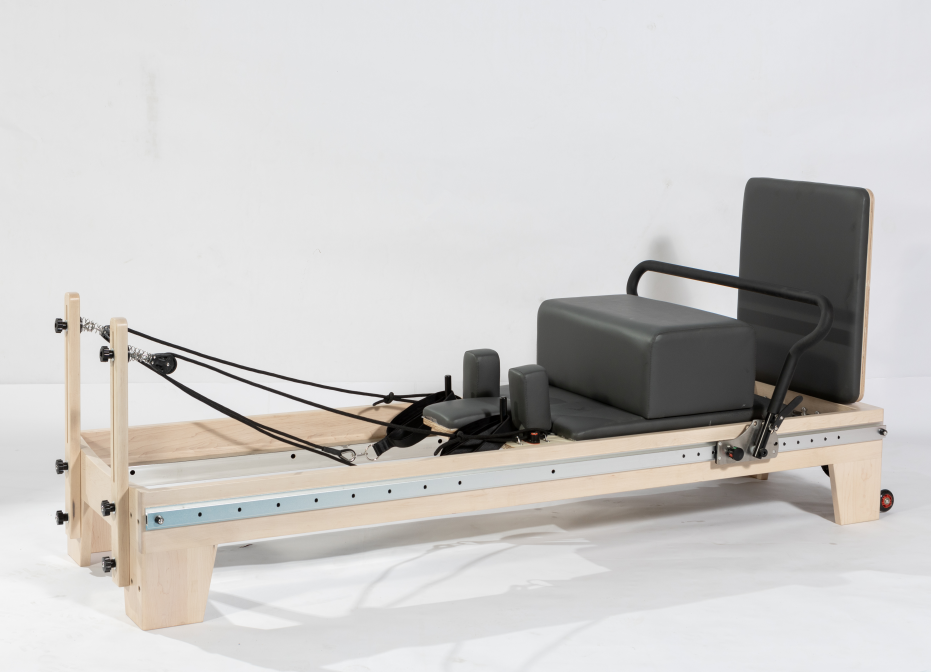
The Frame: Demand heavy-duty construction. Wood frames should be massive (kiln-dried to prevent warping in transit), and aluminum frames must be aerospace-grade die-cast.
-
The Gliding System: Specify an 8-wheel or 10-wheel carriage system riding on 1.5mm to 2mm thick stainless steel tracks to guarantee a silent, frictionless ride.
-
The Springs: This is the heart of the reformer. Insist on fatigue-tested, imported springs (such as high-end Korean components) rather than standard carbon steel, which will stretch out quickly under commercial use.
Step 3: Calculate Logistics and CBM (Cubic Meters)
Understanding international freight is a critical part of knowing how to import Pilates reformer from China. Shipping costs are calculated by volume (CBM), not just weight.
-
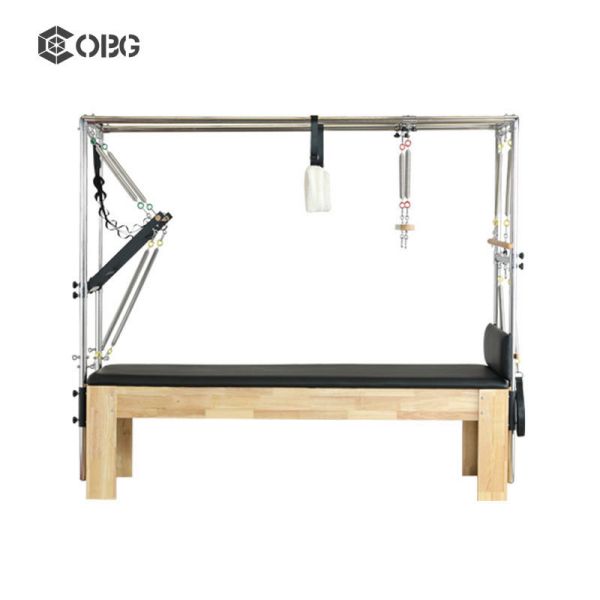
Optimize Your Order: A standard commercial wood reformer takes up about 1.0 CBM, while a full Cadillac can take up to 1.8 CBM. Work with a factory that knows how to securely flat-pack equipment in heavy-duty plywood crates to minimize wasted space inside the shipping container.
-
Leverage Port Locations: Sourcing from a factory located near a major international port (like Tianjin Port) drastically reduces inland transportation costs and loading times, accelerating your overall delivery schedule.
Step 4: Choose the Right Shipping Terms (Incoterms)
When negotiating your order, you must agree on shipping terms. For B2B imports, the most common terms are:
-
FOB (Free on Board): The factory covers the cost of manufacturing and transporting the goods to the local port (e.g., FOB Tianjin). You are responsible for the ocean freight and importing process into your country. This is highly recommended for distributors who have their own freight forwarders.
-
CIF (Cost, Insurance, and Freight): The factory handles everything up to your destination port. You simply clear customs and arrange local delivery.
-
DDP (Delivered Duty Paid): The factory handles the entire process, including paying your local customs duties, and delivers the equipment directly to your studio door. This is perfect for first-time buyers who want a completely hands-off experience.
Step 5: Navigate International Payment Terms (T/T, L/C, & OA)
Understanding how to securely pay your overseas partner is a crucial piece of the puzzle. A professional, established manufacturer will always offer transparent and standard international trade terms.
Here are the most common commercial payment methods you should expect:
-
T/T (Telegraphic Transfer / Wire Transfer): This is the industry standard for B2B equipment sourcing. The typical structure is a 30% deposit to initiate factory production, with the remaining 70% balance paid after the goods are finished and inspected, either before loading or against the copy of the Bill of Lading (B/L). It is fast, standard, and secure.
-
L/C (Letter of Credit at Sight): If you are a large distributor ordering multiple 40HQ containers, you might prefer an L/C. This involves your bank guaranteeing the payment to the manufacturer’s bank only after strict shipping documents are presented. It offers maximum security for massive bulk orders.
-
Advanced Commercial Clauses (e.g., OA at Sight): As you build a long-term, high-volume relationship with a seasoned manufacturer, payment structures can become more flexible to support your cash flow. Experienced export teams understand complex commercial clauses like 100% OA (Open Account) for trusted, established global distributors.
The key takeaway? Never wire full payments upfront to unverified suppliers, and always ensure you are dealing with an export team that speaks the professional language of global trade.
Partner with an Export Expert
Learning how to import Pilates reformer from China doesn't have to be a complicated puzzle. The secret is partnering with a manufacturer who not only builds world-class equipment but also understands the intricacies of international trade.
Operating right from the Tianjin Port hub, we specialize in seamless B2B exports. From crafting premium, OEM-customized reformers to organizing secure container loading and ocean freight, we handle the heavy lifting so you can focus on building your fitness business.
Ready to start importing? Send an email to Naisen and our B2B export team today. Let us provide a detailed specification sheet, calculate your shipping CBM, and offer a custom factory-direct quote tailored to your exact needs!
What to Consider When Buying a Pilates Reformer: A B2B Buyer's Guide
The Difference Between Pilates Reformer and Cadillac: A B2B Sourcing & Logistics Guide
Related Article